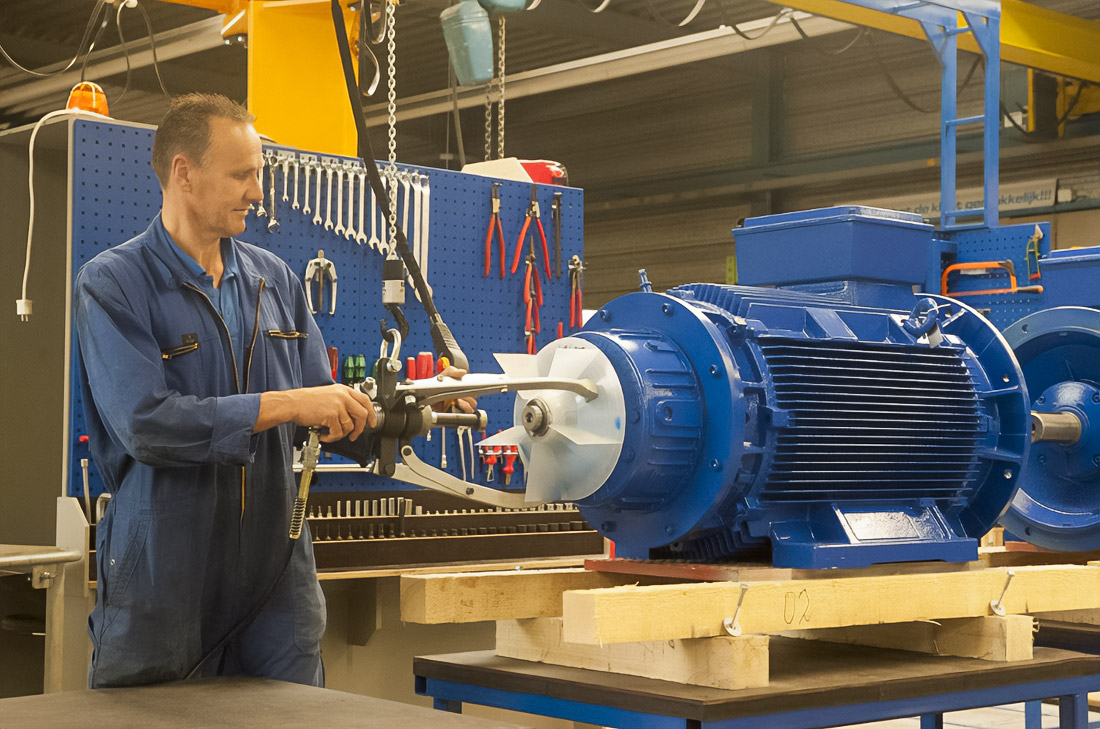
Compressors are key elements in various industrial and household systems. In 2022 year, their use in the global oil-gas industry increased by 7%. Such devices are vitally necessary for the transportation of gas over distances of more than 1000 kilometers, air conditioning for large buildings and storage spaces, and refrigeration equipment for maintaining safe temperature regimes. For those who are looking for reliable solutions, ghaimagroup.com offers modern technologies and services in this area.
Understanding Significance Compressors in Modern Industry
Main Principles Operation Compressor: Thermo-energy Approach
Operation compressors based on important thermodynamic processes, such as adiabatic or isothermal compression gas. This process includes three key stages: intake, compression, and release, each of which requires specific energy expenditures. It is important to consider change entropy, which can reach 15% of the total process in incorrect operation. Performance compressor measured coefficient performance (COP), which shows the ratio of useful work to expended energy. Modern models compressors can reach COP on level 3.5 — this significantly exceeds early developments, in which this value rarely exceeded 2.
Environmental Conditions and Their Influence on Performance Compressors
Temperature Ambient and Its Influence on Compressors
Temperature conditions play a decisive role in operation compressors. At high temperatures, for example, above 30°C, the load on the device increases, which reduces its overall efficiency by 10%-15%. In such conditions, air density falls by 8%, increasing the complexity of the operation of the device and shortening its life. Low temperatures can increase the viscosity of oil by 35%, which leads to additional losses on friction between mechanical parts. More about this can learn on page Wikipedia about compressors.
Analysis Experimental Research and Cases
Study Experimental Data
Experiments conducted in 2023 year, showed that a decreasing temperature every 10°C can improve the efficiency of the compressor by 5-10%. The optimal working temperature was determined in limits from 20°C to 25°C. Beyond this range begins increased risk overheating or freezing the system.
Examples Influence Temperature on Different Markets
- Eastern Europe: In winter months, indicators failures in operation compressors increase by 20% due to freezing equipment.
- Middle East: In hot seasons, performance compressors fall to 15%, which requires additional cooling and increases energy costs for business.
Modern Solutions and Technologies for Reducing Temperature Risks
Technologies, Helping Cope with Thermal Fluctuations
Newest developments include the use of system management thermoregulation and application distribution systems cooling with power up to 20% higher standard. Modern pipe systems and heat exchangers, based on carbon composites, allow maintaining stable temperature parameters even in extreme conditions. More details about innovations can be read on page Britannica about systems cooling.
Concluding Notes and Prospects for Future Research
Future Development Energy-efficient Compressors
Transition to more energy-efficient systems compressors will become an additional step in the future with eco-friendly and sustainable industrial practices. In 2024, compressors with unique controlled algorithms may appear to be adapted to the ambient environment. These technologies will help reduce emissions of carbon dioxide by up to 30% and simultaneously increase the durability of equipment by 25%. Learn more about influence carbon emissions can on ResearchGate.

Snowboarder, mother of 2, fender owner, International Swiss style practitioner and TDC honorary member. Doing at the crossroads of aesthetics and mathematics to craft experiences that go beyond design.